Community

Prof
Chris
Mowles

founder

Chris is Professor of Complexity and Management at the University of Hertfordshire Business School, and has directed the Doctor of Management programme (DMan) for more than 15 years. The DMan is an innovative programme combining insights from the complexity sciences and the social sciences and was the first programme of its kind. Chris occasionally works as a consultant, is an Associate Member of the Institute of Group Analysis, and has published a number of books and articles. He has taught in universities across Europe, including regularly at the Copenhagen Business School.

Related Events
Related Media

Substack

Reflecting on what it means to be human
Chris Mowles
August 25, 2025
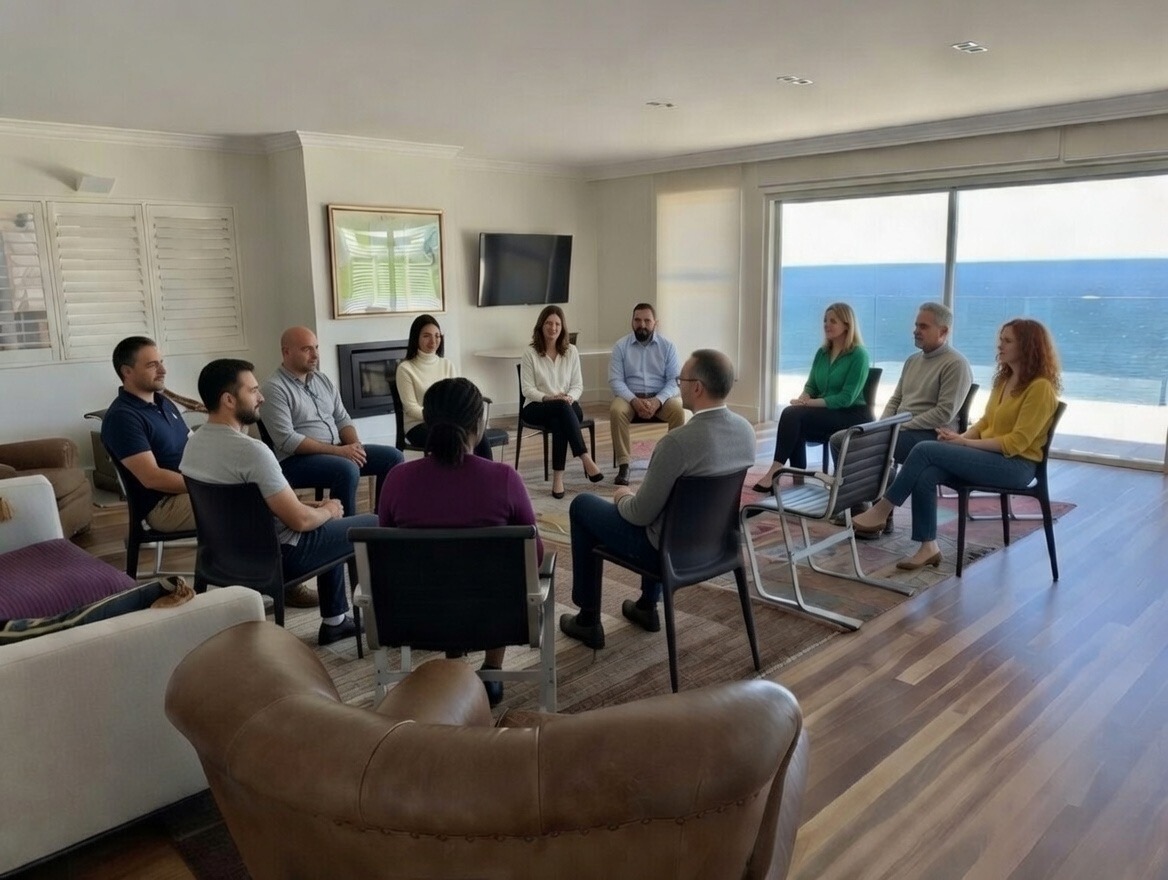
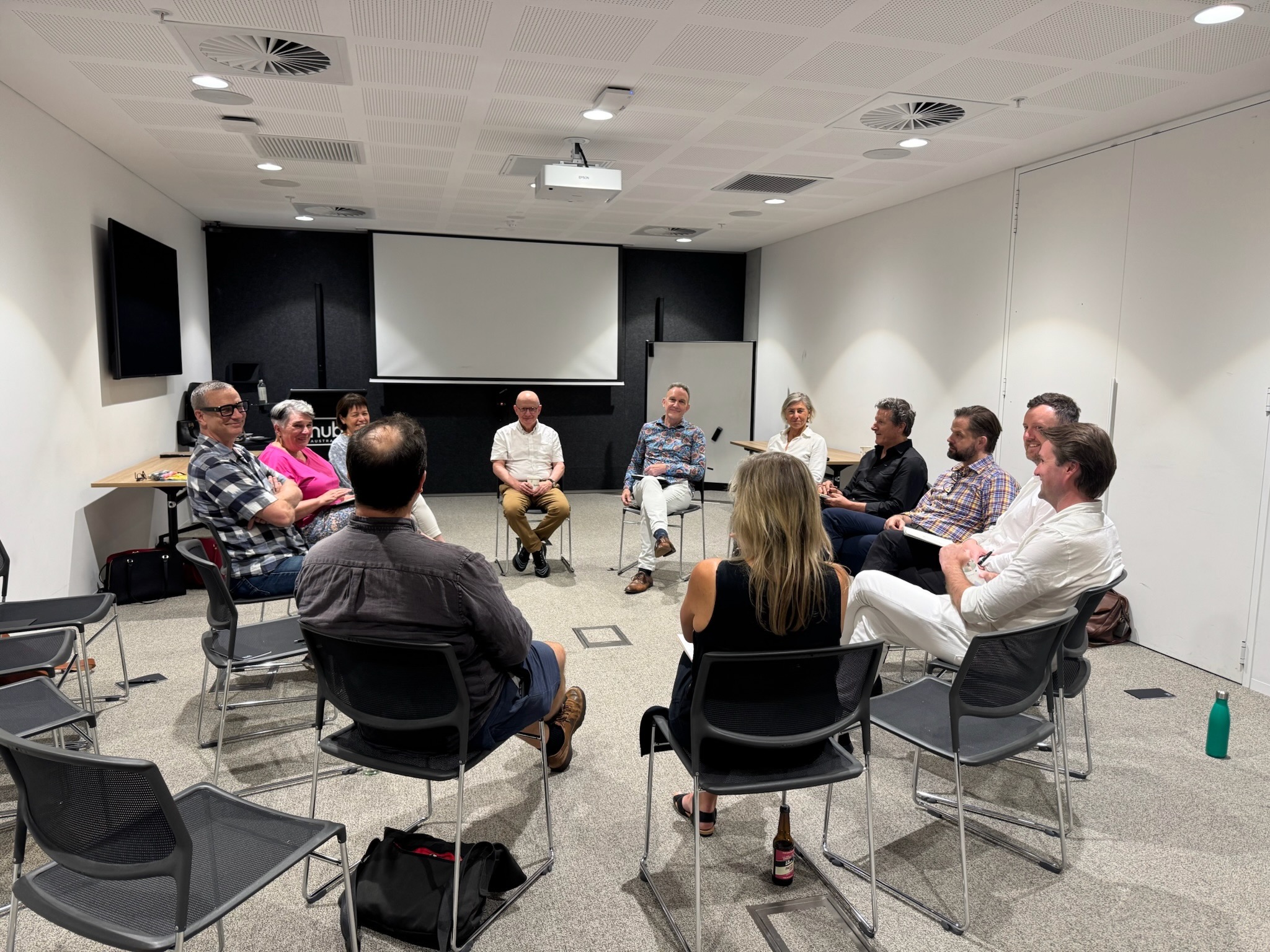
Here are some observations I made from the discussion we had throughout the AI and the Art of Management day organised by ComplexitySalon in Sydney on 25th August. The day was governed by Chatham House rules, so I have generalised. I have not attempted a complete summary of what was a very rich day, and some of these remarks carry my own interpretation.

Substack

What kind of leaders do we need in a complex world?
Chris Mowles
April 17, 2025
I have written before about how I was invited by a colleague to complete a questionnaire for her 360 degree appraisal of her competence as a leader. The questionnaire was long, so I have aggregated the questions, but here are the sorts of things that I was asked to evaluate.

Substack

Move fast and break things
Chris Mowles
April 17, 2025
Move fast and break things — this is the poster that one of the Tech Giant CEOs is supposed to have in his office. The invitation to ignore social conventions, perhaps even to avoid consulting people and talking things through, is a signature of managers in a hurry. The idea is that thinking, talking, can disrupt progress and slow everything down.

Substack

Changing our mindset for organisational culture change
Chris Mowles
April 17, 2025
The term mindset, a collection of beliefs and/or attitudes, has evolved to mean any fixed group of ideas that has come to govern behaviour of an individual or a group. The term conveys cognitivist assumptions that attitudes and beliefs are confined inside an individual’s head. More, that a mindset can be changed with a particular programme of interventions of a behavioural kind.

Substack

Bringing your authentic self to work
Chris Mowles
April 15, 2025

Substack

Playing the ratings game
Chris Mowles
April 15, 2025
When buying anything, using something or requesting services as a citizen it is impossible to escape the game of performance management, the metrics deployed to ‘measure’ what is generally referred to as my customer experience. ‘We want to hear from you! Give us your feedback!’

Substack

Experiencing uncertainty
Chris Mowles
April 10, 2025
I had been working with a group of managers and we had been discussing how a lot of managerial work is about dealing with uncertainty. Things don’t work out quite how you planned, surprises come out of left field, or your boss, or the organisation with which you are working closely, has just decided that something else is now a priority. What you came in to do in the morning has somehow gone off course by the afternoon, but you’re still responsible for your first priority. This was the link I had been making in the seminar I had given them earlier in the day on the complexity sciences: I had been arguing that social life arises in the interplay of differing intentions of which no one is in control. But how do you know how to respond and what to pay attention to?

Substack

Hard talk on leadership
Chris Mowles
April 10, 2025
Everyone knows what good leadership is in the abstract and the ideal. But there is no leadership in the abstract and the ideal. There is only what you do when you show up at work which will never be ideal. So if you are a leader you are always a work in progress making it up as you go along with your colleagues and hoping that previous experience will count for something.

Substack

Before fascism becomes a movement, it must circulate in everyday life
Chris Mowles
April 10, 2025
There is nothing inevitable and linear about human progress, as we might infer from listening to the evening news. Sometimes, as the sociologist Norbert Elias observed, we go through a decivilizing process, periods where human behaviour regresses and explicit conflict becomes more visible and destructive. He made sense of the regression to barbarism in Germany in his work The Germans, a subject of particular interest to a German Jewish citizen forced to flee as a refugee to the UK.

Youtube

Complexity: a key idea for business and society
Chris Mowles
October 17, 2022

Youtube

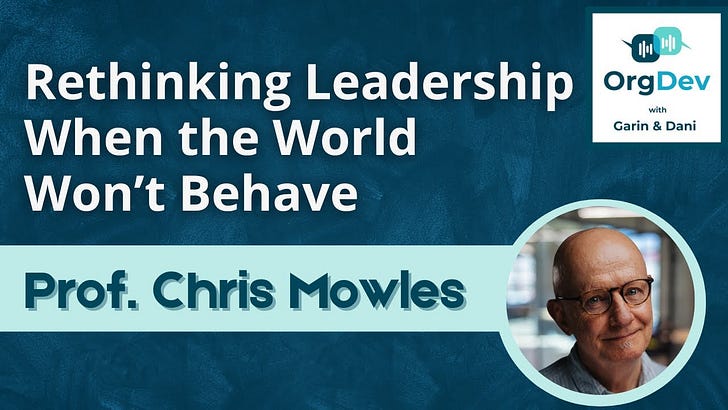
Rethinking Leadership When the World Won't Behave | Professor Chris Mowles | OrgDev Podcast #85
OrgDev Podcast, Chris Mowles
November 28, 2025
Is it time to rethink leadership and management? Many leaders work under the illusion that they can control what goes on but in reality organisations are messy, and unpredictable. So what does this Complexity really means for how organisations function, how leaders make decisions, and how people navigate uncertainty. One person who has challenged the neat models and tidy solutions we often reach for – instead opens up more real, human, and sometimes uncomfortable conversations about leadership, change, and organisational life is Professor Chris Mowles

Youtube

ComplexitySalon 02: The Experience of Polarisation with Prof. Carl Rhodes & Prof. Chris Mowles
ComplexitySalon
November 25, 2025
Video recording of the event "The Experience of Polarisation"
Attended Events
No related event
Let’s get to know each other
Get in touch
Acknowledgement of Country
We meet from many places, each with its own deep histories of belonging and custodianship. In the spirit of reflexive practice, we acknowledge that the lands we occupy carry obligations we are still learning to understand. In Australia, this begins with recognising the Traditional Custodians of unceded Country and paying respect to Elders past, present and emerging.
© ComplexitySalon 2026